



Lo actual
Descubre el Turismo "Slow" en Venezuela y desconéctate en un viaje para volver a empezar
El ritmo acelerado del día a día nos consume. Entre notificaciones constantes, pantallas y la prisa urbana, el cuerpo y la mente exigen una pausa urgente. ¿Cuándo fue la última vez que escuchaste el silencio real? En los Andes venezolanos y en la mágica Colonia Tovar, el tiempo no se mide en minutos...
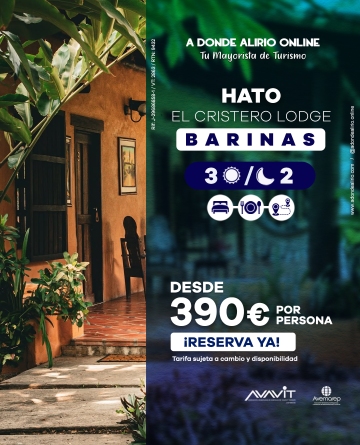
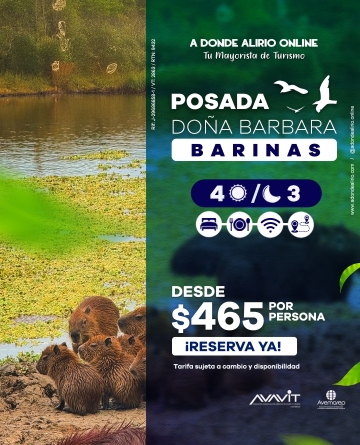
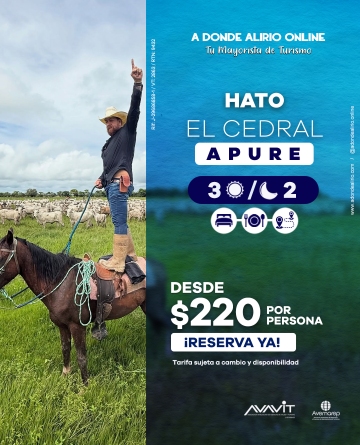
Leer más...Las 3 Joyas de Alojamiento que debes conocer en los Llanos Venezolanos
Los llanos venezolanos representan uno de los destinos ecoturísticos más fascinantes del país, funcionando como una auténtica aula abierta y natural donde es posible conectar profundamente con la rica fauna...
Leer más...Copa Airlines reinicia operación en el Aeropuerto Internacional de Maiquetía en Caracas, Venezuela
A partir del 1° de septiembre de 2026, Copa Airlines volverá a operar la ruta con 1 vuelo diario desde y hacia el aeropuerto internacional Simón Bolívar de Maiquetía....
Leer más...AVA Resort Cancun refuerza su propuesta familiar con nueva promoción FUNPASS
Esta oferta por tiempo limitado incluye de manera gratuita dos pases por habitación para disfrutar de Laser Tag, Bowling y una experiencia de simulador de béisbol, en estadías de mínimo tres noches...
Leer más...Aliados / Patrocinantes
- A DONDE ALIRIO ONLINE, C.A.
- Full Enjoy, C.A.
- Souvenir Tours Viajes y Turismo, C.A.
- Tutraslado.com / Full TRANFERS
- AMSI Group C,A,
- Cardona & Avila Contadores Públicos
- Serangelli Garcia & Asociados
A DONDE ALIRIO ONLINE, C.A.
Teléfonos: 58 0424 1786454
Celular: 58 (0414) 133.6192 / (0424) 2095428
E-mail: adondealirioonline@gmail.com
URL: https://www.adondealirio.com
Full Enjoy, C.A.
Teléfonos: +58 0212 763.3769 / 762.2429 / 761.2677
Whatsapp:58 414 2088198
E-Mail: info@viajesfullenjoy.com
URL: https://www.viajesfullenjoy.com
Souvenir Tours Viajes y Turismo, C.A.
Teléfonos: 0212 993.5137, 993.0156, 993.6828
E-mail: souvenirtours@cantv.net
URL: https://www.souvenirtours.com
Tutraslado.com / Full TRANFERS
Teléfono: +58 212 377.5766
Fax: +58 212 762.2429
URL: https://www.tutraslado.com
AMSI Group C.A.
Celular: (58-212) 04143260003
E-mail: amsi.group@gmail.com
Whatsapp: (58-212)
URL: https://www.amsigroup.net
Cardona & Avila Contadores Públicos
Teléfonos: (58-212) 935.8004 / 8005 / 8006
E-mail: info@nexia.com.ve
Whatsapp: (58-212) 0414 3113818
URL: https://www.nexiavenezuela.com
Serangelli Garcia & Asociados
Teléfono: +58 (0212) 574.6202 / 575.4470 / 577.8497
Celular: (0414) 316.6638
E-mail: info@serangelligarcia.com
URL: https://www.serangelligarcia.com
La Gran Sabana (with english version)

La Gran Sabana es una llanura situada en el macizo Guayanes, en la frontera con Guayana al este y con Brasil al sur. Esta extensa región es un lugar ideal para el turismo ecológico...
Leer más...Turismo
Te explico qué es el Etnoturismo, una experiencia inolvidable

El etnoturismo es una modalidad del turismo cultural que se centra en el conocimiento de las culturas étnicas, es decir, aquellas que se diferencian de la cultura mayoritaria de la sociedad. El objetivo del etnoturismo es promover la comprensión intercultural y el respeto por las diferencias culturales, además de ofrecer la oportunidad de aprender sobre las costumbres, tradiciones, creencias y formas de vida de estas comunidades...
¿Sueñas con viajar pero tu billetera dice "espera"?

El 2026 ha llegado con la necesidad imperiosa de desconectar, pero sabemos que desembolsar el costo total de unas vacaciones de golpe puede desequilibrar tus finanzas. La planificación inteligente es...


La Gran Sabana (with english version)
La Gran Sabana es una llanura situada en el macizo Guayanes, en la frontera con Guayana al este y con Brasil al sur. Esta extensa región es un lugar ideal para el turismo ecológico...
Leer más...Strudel de espinacas estilo griego

Este strudel de espinacas estilo griego consiste en un rollo de masa filo relleno de espinacas, queso de cabra y queso feta que al ser horneado queda crujiente y delicado...
Leer más...Feria de Turismo de Anzoátegui: Un catalizador del desarrollo económico y cultural

La III edición de la feria de turismo de Anzoátegui, a celebrarse del 6 al 8 de septiembre, se destaca como una oportunidad inigualable para impulsar el sector turístico del estado y fortalecer su economía. El gobernador Luis Marcano, con su entusiasta invitación a empresas y visitantes, ha resaltado la importancia de este evento para el desarrollo regional...
Leer más...


